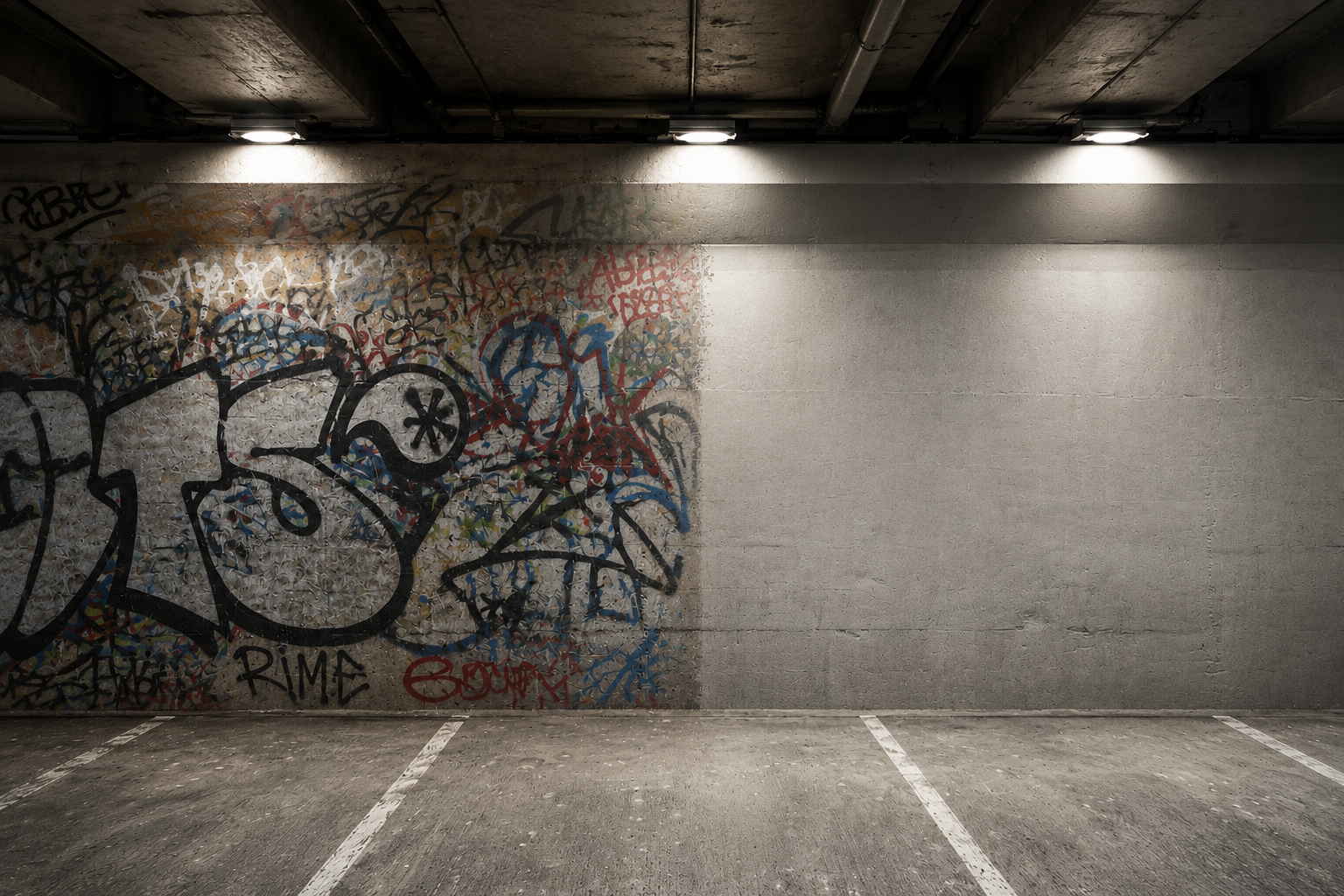
Graffiti in a garage signals vacancy and neglect. It spreads. One tag invites ten more. Removing it quickly prevents escalation. Understanding removal methods, realistic costs, and response timing protects property assets and maintains security standards.
A broken windows theory study confirmed visible neglect increases crime. Garages with regular graffiti removal see lower vandalism incidence. The tag signals space is not monitored. Criminals interpret quick removal as active management and move to unmonitored properties. Speed of response sends a message about property condition and management attention.
Pressure washing removes spray paint from most concrete and sealed surfaces. Some paint requires chemical treatment before washing—chemical breaks paint bond, then water removes it. Older paint baked onto concrete may need grinding or scarifying, removing top concrete layer entirely. This is expensive but necessary for years-old stains. Protective coatings (anti-graffiti sealers) applied after removal slow future paint adhesion, making removal easier next time. Coating wears off and needs reapplication every 1-2 years.323
Fresh graffiti (days old) removes in minutes with pressure washing. Single tag 5-10 sq ft costs $100-$300. Graffiti existing months costs more. Wall completely covered costs $1,000-$2,000. Best practice: immediate removal same day or next day. This prevents escalation to multiple tags and signals space is maintained.
If garage has graffiti, remove this week. Establish rapid response protocol: any new graffiti addressed within 48 hours. Prevention cost is lower than reclamation. Apply anti-graffiti sealer after removal to slow future vandalism and demonstrate active maintenance.

.svg)
.svg)
.svg)


© 2025 Gleam. All rights reserved. · Privacy Policy · Terms of Service