The first impression happens before customers walk through your door.

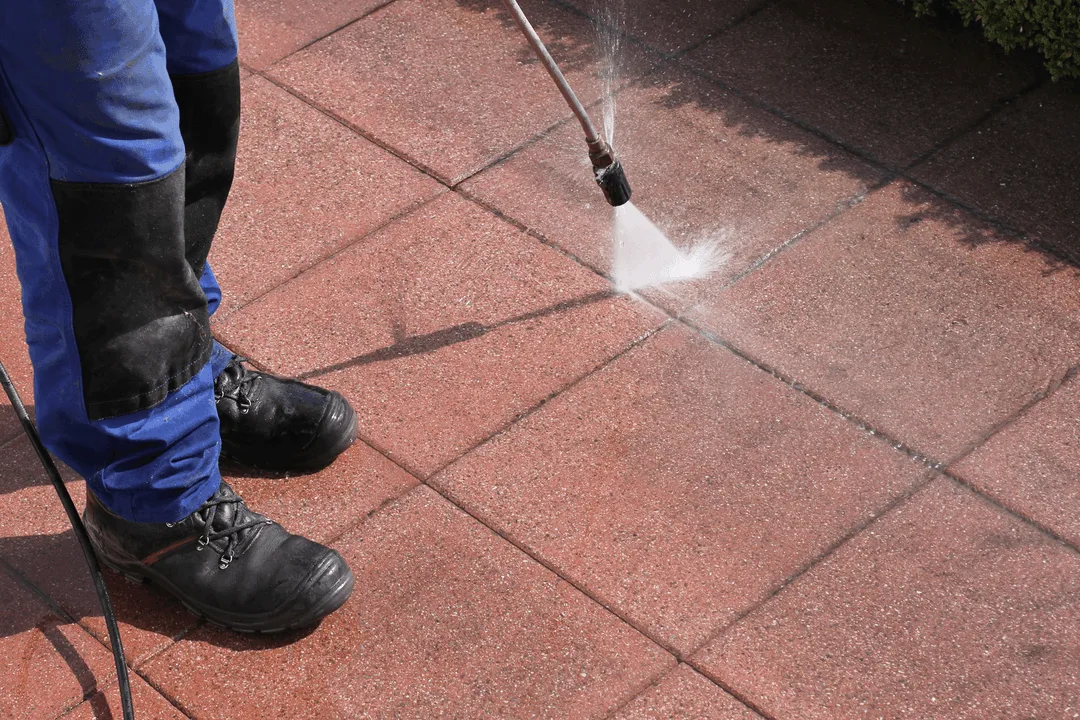
Entry flat work is everything customers walk on from the parking lot to your front door. The sidewalks, entryways, patios, and walkways that shape how people feel about your business before they step inside.
For a restaurant, it's the path from the parking space to the hostess stand. For a grocery store, it's corner to corner across the front of the building. For a big box retailer, it's every surface a customer's foot could touch and their eyes can see.
Gum-spotted concrete. Grease stains by the entrance. Dirt ground into the corners. Customers notice all of it—even if they don't say anything.
Most pressure washing vendors treat flat work as a rinse-and-go job. They show up, spray water on the surface, skip the corners, ignore the gum, and leave. When the concrete dries, it looks basically the same as before. You paid for a cleaning that disappeared in 24 hours.
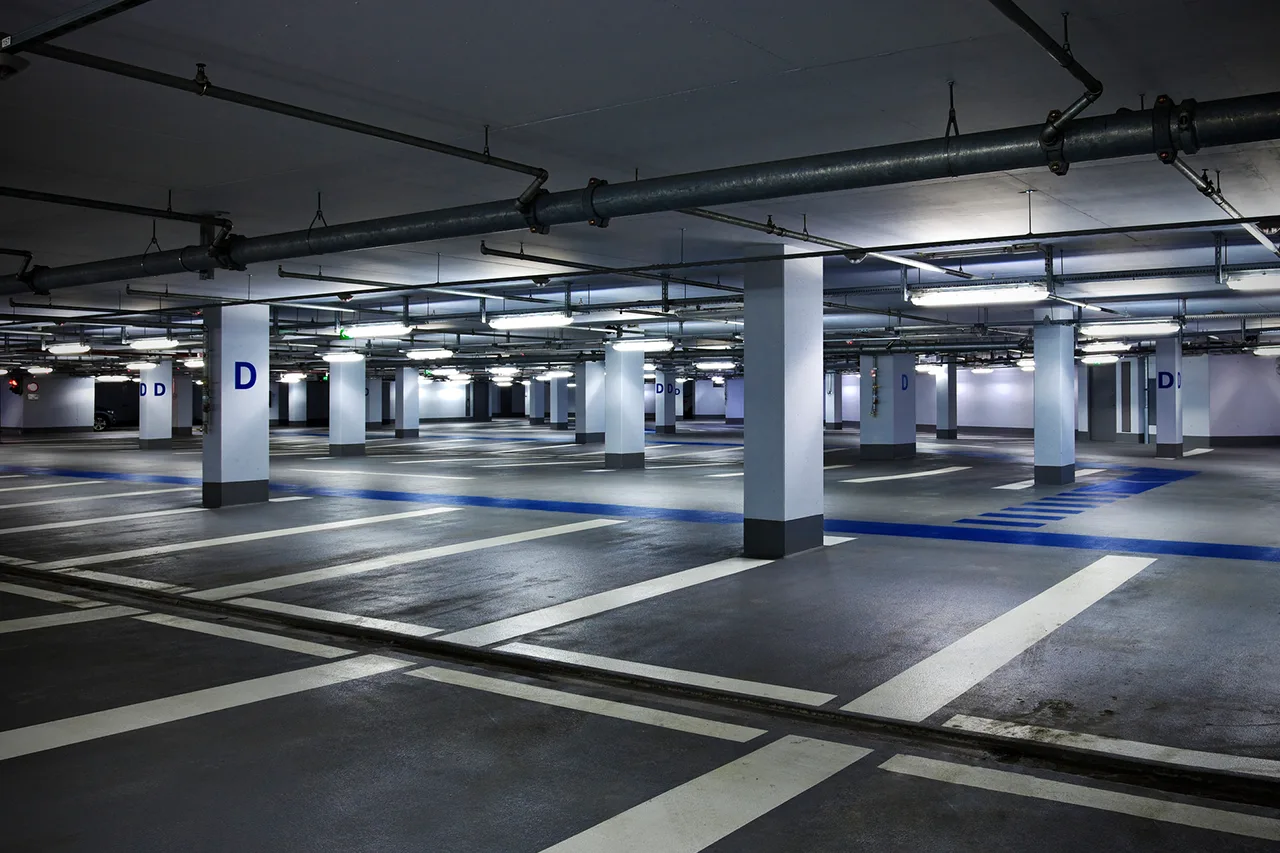
A clean garage tells customers you care about more than just the sales floor.

Parking garage cleaning covers everything from single-level structures to five-story decks—100,000 to 400,000+ square feet of concrete, stairwells, elevators, and the areas in between.
This isn't just pressure washing. It's graffiti removal, deodorizing, oil and grease treatment, and yes—the stuff nobody wants to talk about but every urban garage deals with.
Parking garages get nasty. Oil drips from cars. Trash collects in corners. Graffiti shows up overnight. In urban locations, you're also dealing with human waste, needles, and situations that make customers feel unsafe.
The condition of your parking garage tells people how much you care about the details they don't see. If the garage is neglected, what else are you cutting corners on?
The back of your building matters too—especially when the EPA shows up.

Compactor cleaning covers waste compactors, compactor pads, chutes, ramps, and the surrounding areas where garbage, grease, and organic waste accumulate.
We don't just spray it down. We disassemble the compactor, clean every component, and put it back together. The goal is a machine that looks and smells like it's supposed to.
The EPA has come down hard on compactor compliance, especially in California. A neglected compactor isn't just an eyesore—it's a liability. Fines add up fast.
But compliance aside, there's a practical reason to keep compactors clean: longevity. A well-maintained compactor lasts longer and breaks down less often. The ROI on regular cleaning is real.
The sides and back of your building deserve the same attention as the front.

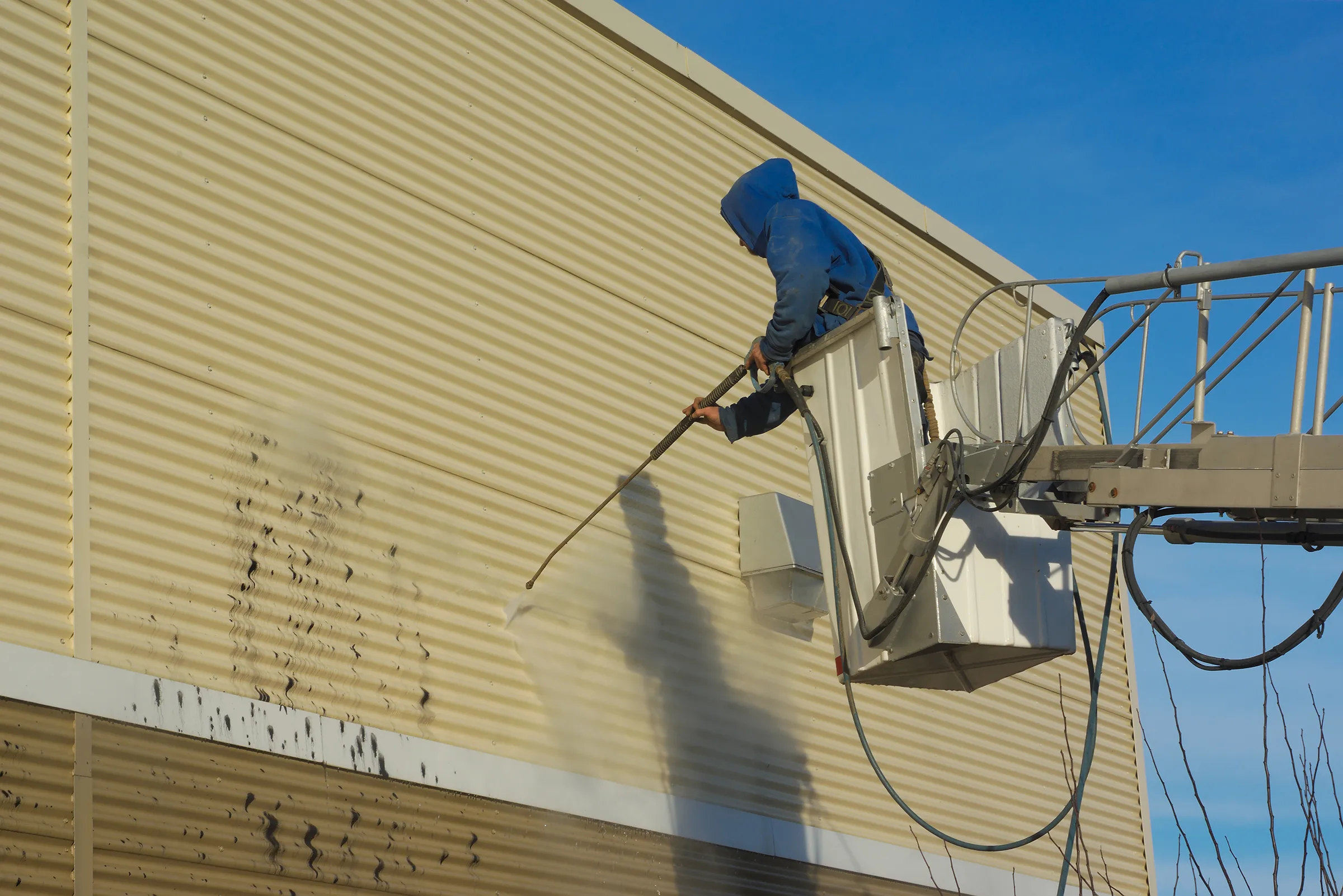
Building envelope cleaning covers the exterior walls of your structure—front, sides, and back. This includes algae removal, soft washing for delicate surfaces, graffiti cleanup, and general grime removal.
If someone drives around the side or back of your building, they should see the same level of care as the front entrance.
In humid climates—Texas, Florida, the Southeast—black algae is a constant problem. It starts as a faint discoloration and turns into dark streaks that make your building look decades older than it is.
And then there's graffiti. The longer it sits, the more it invites additional tagging. Fast removal sends a message that the property is being watched and maintained.
Your interior merchandising deserves to be seen.

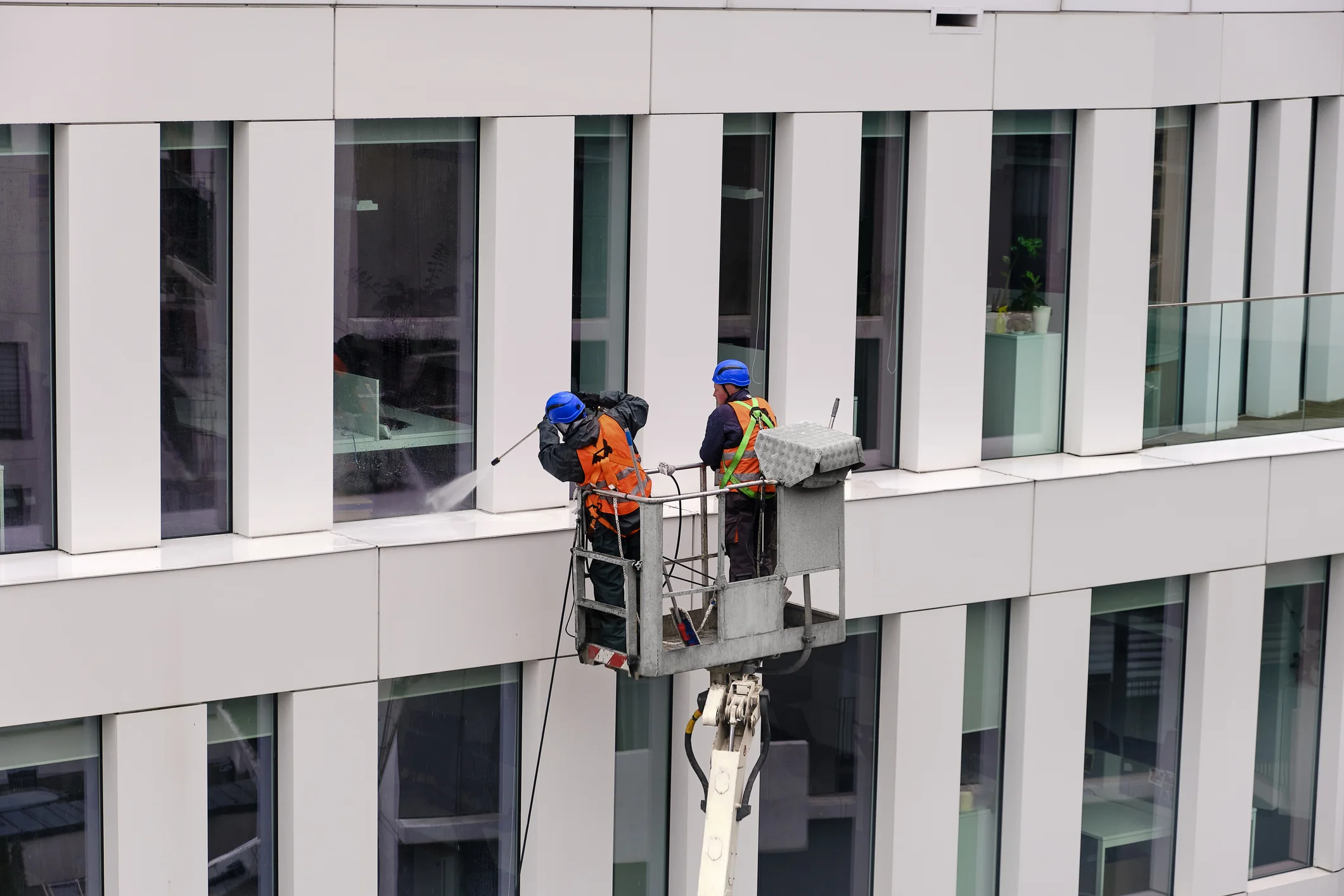
Commercial window cleaning from street level to upper floors. This includes exterior glass, frames, sills, and the detailing work that makes windows actually look clean—not just less dirty.
Retailers spend a fortune on visual merchandising. Window displays are designed to pull customers in from the sidewalk. But when those windows are cloudy, spotted, or streaked, all that effort gets lost behind dirty glass.
Hard water stains are a particular problem in certain regions. They build up over time and won't come off with standard cleaning. Left untreated, they can permanently etch the glass.
Fresh lines that keep traffic flowing and keep you compliant.

Parking lot striping covers the painting of parking space lines, handicap markings, fire lanes, directional arrows, stop bars, crosswalks, and custom markings specific to your property. Faded lines create confusion. Fresh striping creates order.
When parking lot lines fade, customers don't know where to park. They take up two spaces. They block fire lanes. They park in handicap spots that aren't clearly marked.
ADA compliance isn't optional. Handicap spaces need to be clearly marked with proper signage. Fire lanes need to be visible. If an inspector shows up and your markings are faded, you're looking at fines.