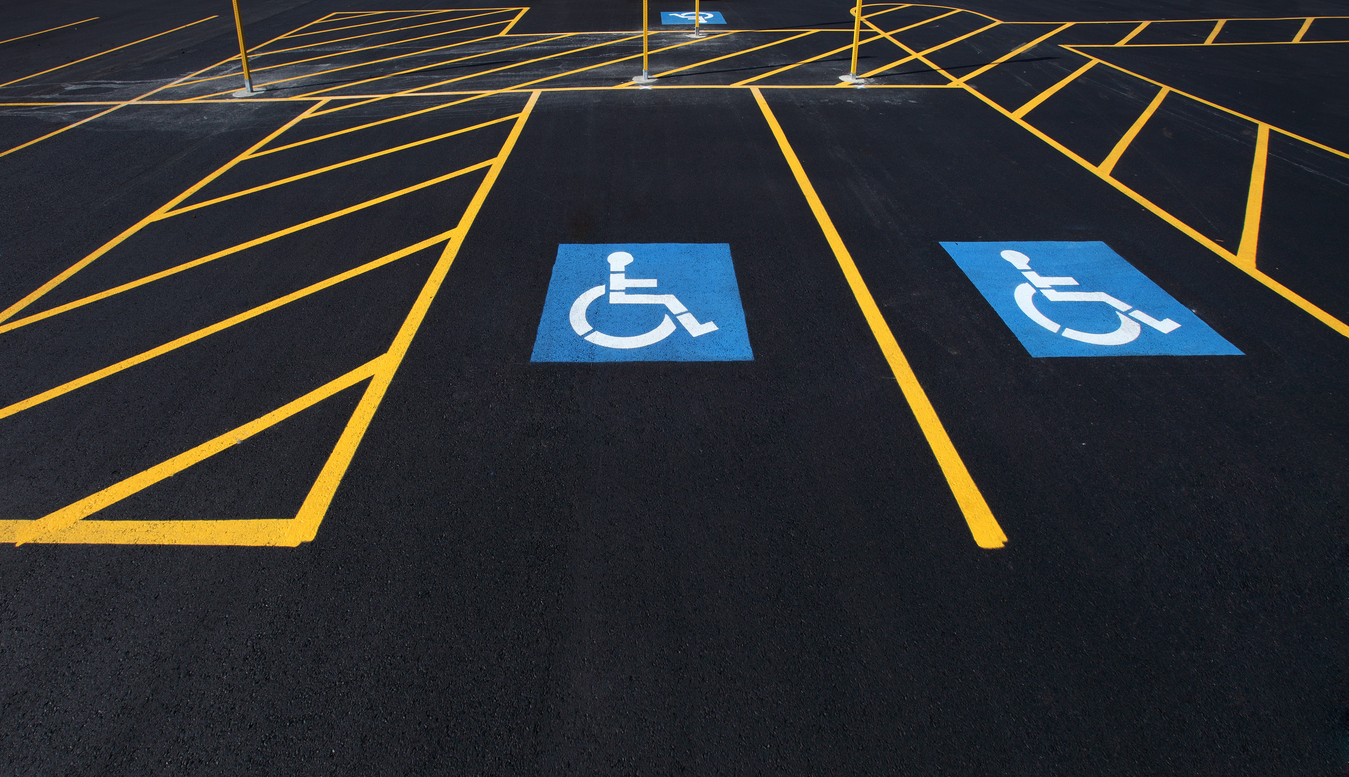
ADA requires accessible parking spaces on every parking lot. Specifics matter: dimensions, markings, signage, location, and surface requirements are all regulated. Non-compliance exposes property owners to lawsuits from disabled customers and fines from federal agencies. Understanding requirements prevents costly violations and ensures property is truly accessible.
Every parking lot with 1-25 spaces needs minimum one accessible space. 26-50 spaces need two. 51-75 spaces need three. Spaces must be nearest accessible building entrance, on level ground, with 8-foot-wide accessible route to entrance. Spaces need painted markings: 8-foot-wide space for sedan, 11-foot-wide access aisle on either side. Van-accessible spaces need 11-foot space plus 8-foot aisle.
Blue paint is standard but not required by law. Blue is used by convention so disabled drivers and enforcement can identify accessible spots. Spaces must be marked with painted lines and blue striping. International Symbol of Accessibility (wheelchair symbol) must appear on pavement. Access aisles cannot be parked in by non-accessible vehicles. Violation fines are $50,000-$300,000 depending on severity and repeated violations.
Accessible spaces need vertical signage showing the International Symbol of Accessibility. Sign must be 54 inches above ground minimum (measured from ground to bottom of sign). Sign must not obstruct sight lines from parked vehicles. Van-accessible spaces need additional sign. Signage is not optional—it's required to communicate the space is reserved.
Audit parking lot immediately. Count spaces and determine how many accessible spaces required. Hire ADA-certified striping contractor to assess current markings and signage. Schedule striping to bring lot into compliance. Document compliance with photographs. This protects against future disability discrimination lawsuits.

.svg)
.svg)
.svg)


© 2025 Gleam. All rights reserved. · Privacy Policy · Terms of Service