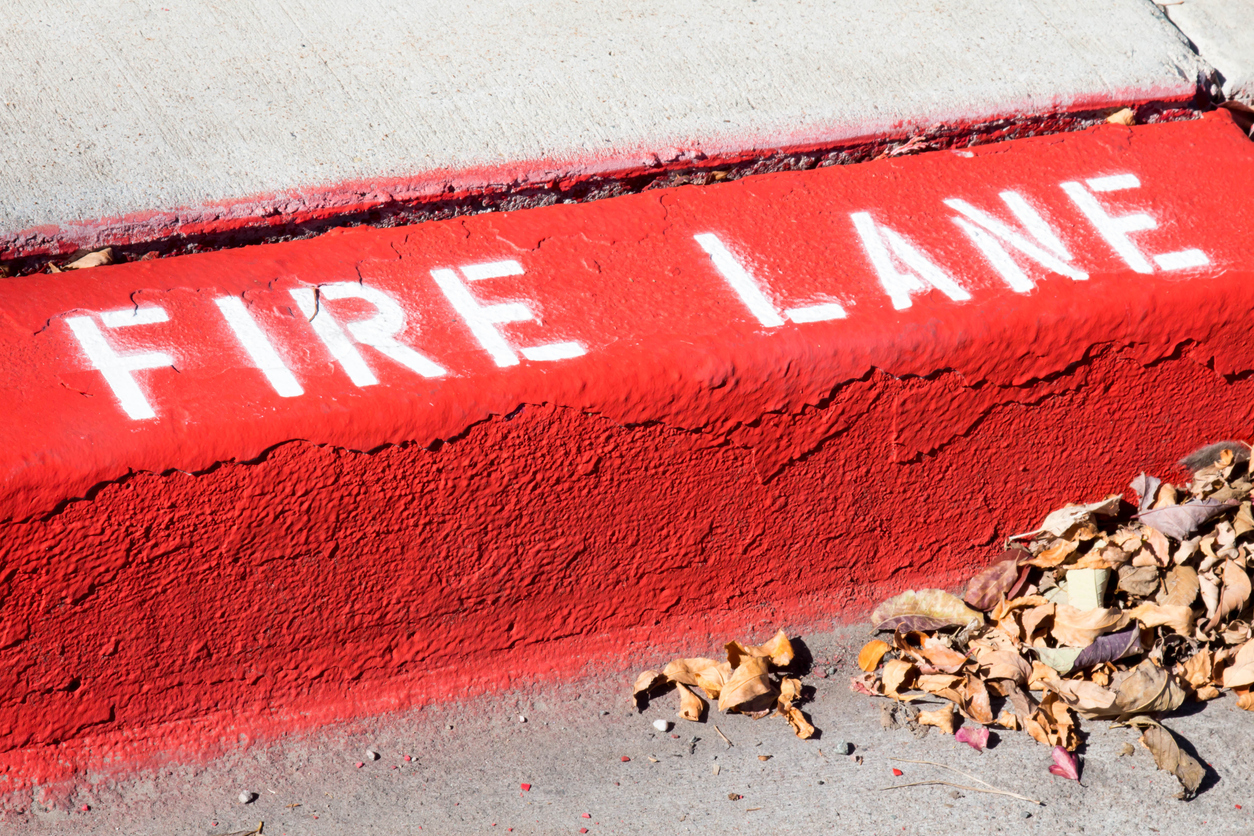
Fire lanes save lives. They must remain clear for emergency vehicles. Proper marking is required by code. Non-compliance blocks fire department access and creates liability. Understanding requirements prevents violations and protects occupants and property.
Fire lanes must be minimum 12 feet wide and clearly marked with red paint and yellow letters reading NO PARKING or FIRE LANE. Markings must be visible and maintained. Fire lane must remain unobstructed at all times—not even temporary parking is allowed. Vehicles parked in fire lanes block access and result in tickets, towing, and emergency service delays.
Red paint (bright reflective red) marks the entire edge of fire lane. Yellow 12-inch letters spell NO PARKING or FIRE LANE. Letters spaced 20 feet apart maximum. Signs at lane entrance stating FIRE LANE in white letters on red background. Signs must be 18 inches wide minimum. Markings must be renewed when faded—visibility is critical.
Property owners are liable if fire lane is obstructed when emergency occurs. If fire department cannot reach building because vehicles block lane, liability is on property owner. Fines for fire lane obstruction range $100-$500 per vehicle. Repeat violations or those that impede emergency response carry steeper penalties. Enforcement is serious—fire safety is non-negotiable.
Identify all fire lanes on property. Verify marking is clear and visible. Check that paint is bright red and letters are legible. Schedule restriping if faded. Verify signage is present and visible. Consider no-parking enforcement to prevent violations. Maintain documentation showing fire lane compliance. This is life-safety requirement and legal necessity.

.svg)
.svg)
.svg)


© 2025 Gleam. All rights reserved. · Privacy Policy · Terms of Service